When and how to root fig cuttings
One of the things I enjoy about fig plants is how easy it is to propagate varieties. The winter is perhaps the best time to start rooting your fig cuttings. There is nothing more uplifting than to see small green leaves contrasting the white and grey in the cold months. This post is aimed at demystifying the process and proving a quick narrative for when and how to root fig cuttings.
The most important part of the process is, of course, the cuttings. My main advice is to obtain cuttings from trusted sources or reputable nurseries. It may seem obvious but think of cuttings as a long-term project that will produce figs down the road. You don’t want to discover a few years later that the plant you invested so much time and care in is a knockoff. I have been there, and it has been a frustrating experience. Avoid sellers from common marketplaces and be cautious of low-cost cuttings, trust collectors and nurseries that have been carefully growing these varieties for years.
In our experience, cuttings with at least 3-4 nodes, freshly harvested from a dormant tree (regardless of whether the wood looks fully or partially lignified) are the best. I avoid placing cuttings on the fridge and prefer to order or harvest cuttings within a few days of starting the rooting process.
Sanitizing your cuttings is a key step and it does make a difference. There are multiple methods online and tutorials for this. However, I have found that dish soap and water work really well. The soap and water solution is good enough to remove any unwanted material, sanitize the cutting, and gentle enough not to damage the plan tissue.
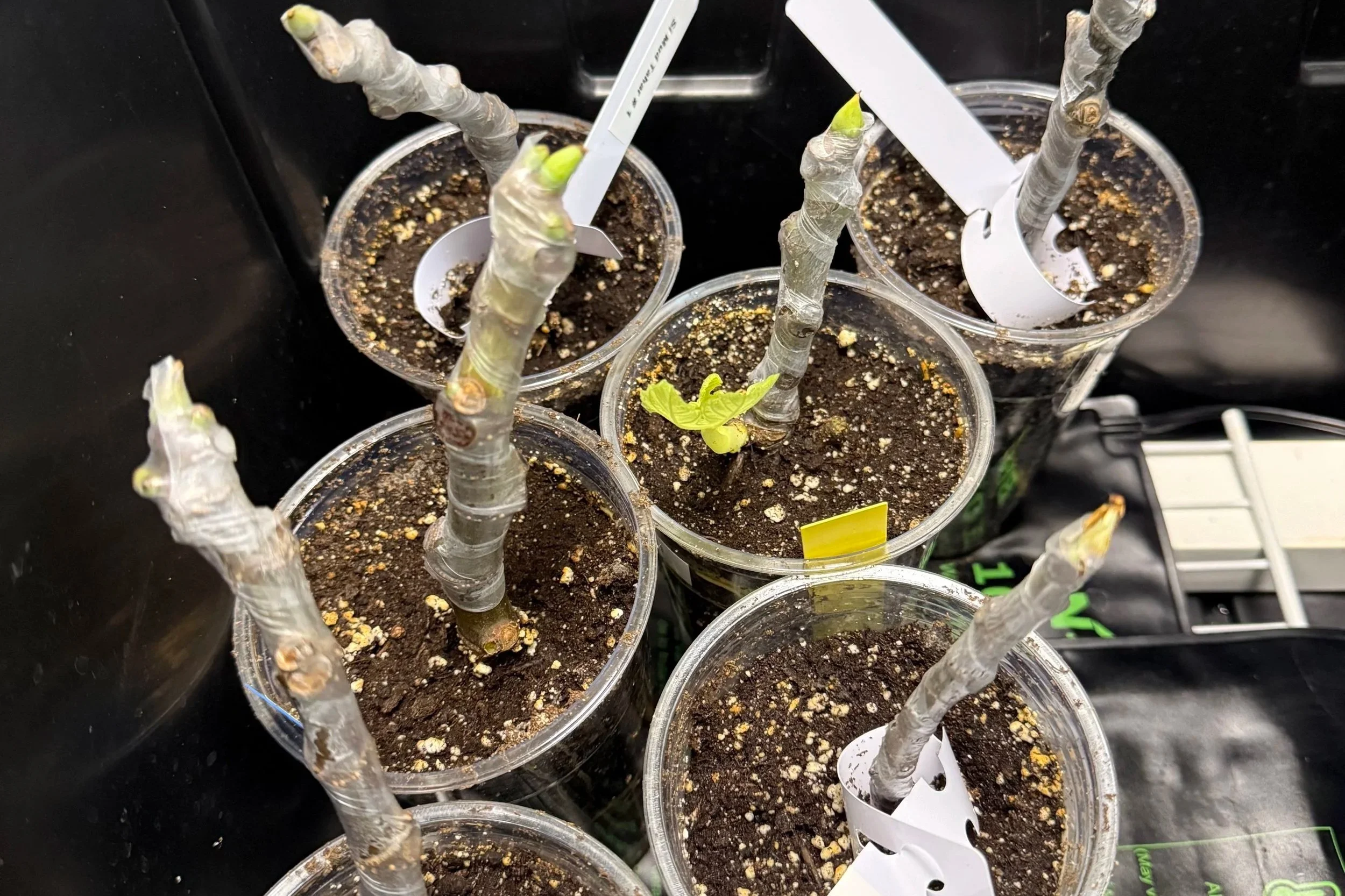
Once you have sanitized the cuttings, dry them and seal the upper section with Parafilm tape to prevent dehydration overtime. The next step is to gently scratch the lower part and place a small amount of rooting hormone (either liquid or powder). Insert the cutting in a container with your growth media of choice (Pro-Mix HP or any sort of seed starting media). Make sure the media has been pre-hydrated and it is not oversaturated with water to prevent rot. Label your cuttings so that you can identify them in the future.
It is important to keep cuttings in an area of the house that is warm and has consistent temperature and humidity (not susceptible to sudden changes). Also, keep cuttings away from other plants to prevent pest such as fungus gnats from causing issues. The use of heating mats is advised. These mats provide enough heat to accelerate the rooting process and maintain a healthy young plant in the winter months.
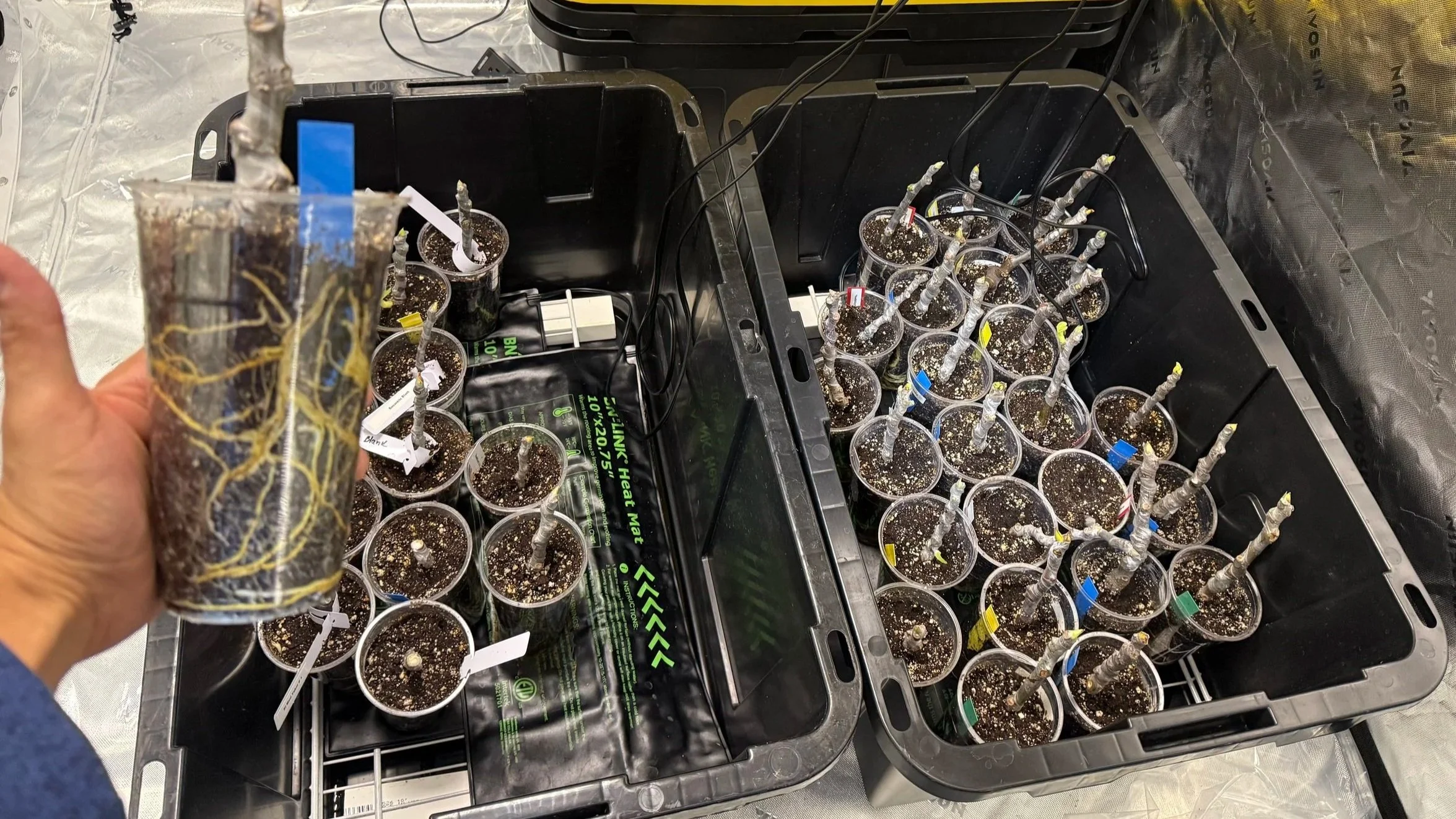
Most fig cuttings will start to form roots within a month, and small leaves after 2 months. However, some varieties can take up to 3 months just to root. Our advice is to be patient and do not touch or disrupt the cuttings. Water only when the soil has started to dry. It is best to water in small quantities as needed.
Grow lights are best used when the cutting have produced strong roots and some leaves. If you don’t have a grow light, simply place the container next to a window for some sunlight.
On a final note, do not become demotivated if the cutting process is unsuccessful. We all have been there. In early attempts, our success rate was about 20%. By being persistent and carefully improving our grow conditions and methods the success rate has settled around 90% in average. Nonetheless, there are always issues that are hard to forecast or correct. Enjoy the process and treat it as an experiment, learn about your particular method, find ways to improve it, and try again if needed.
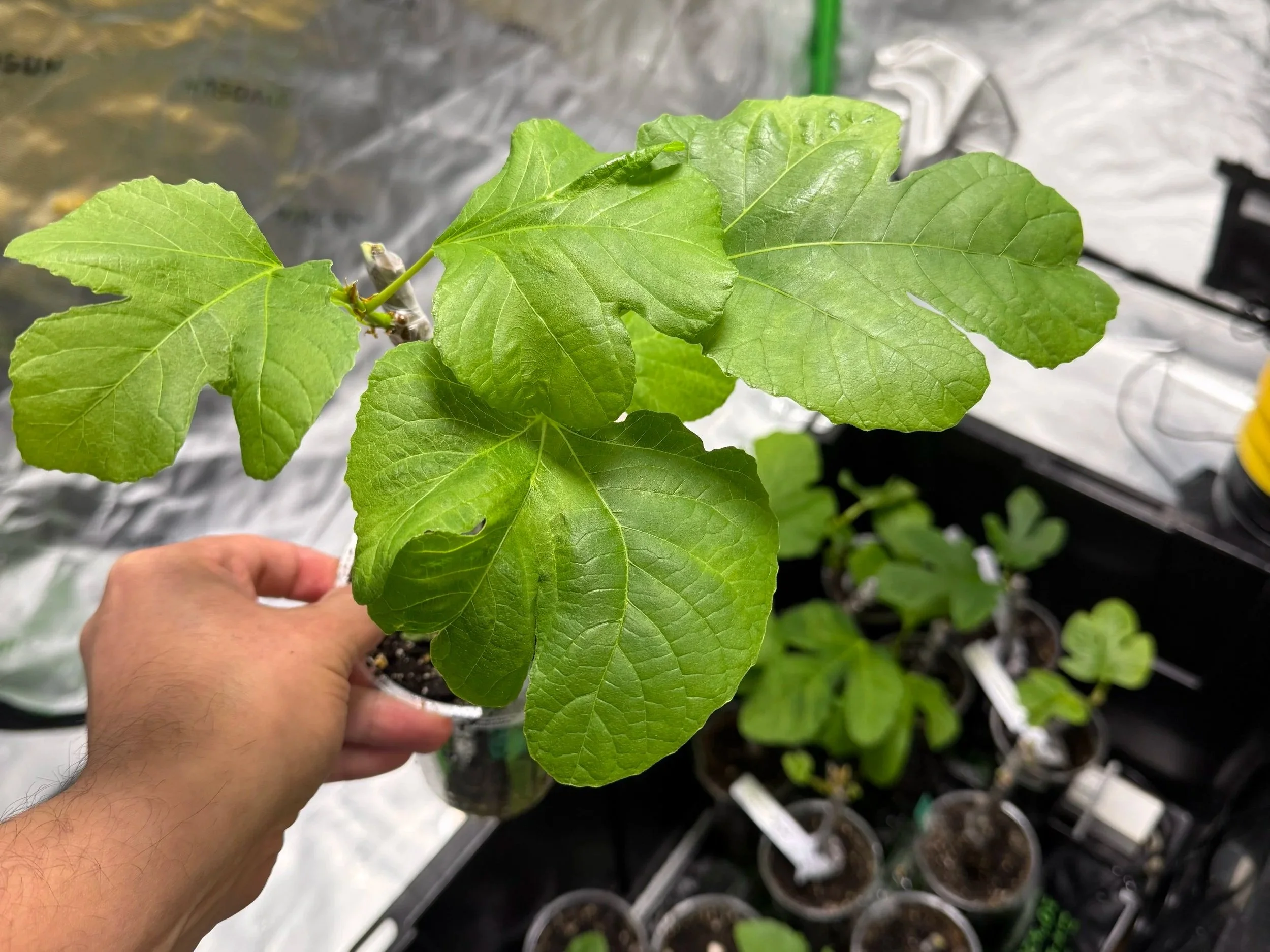
Some of the cuttings being rooted for summer 2026.
